Analysis of the Underlying Implementation of RACSequence and RACTuple Collections in ReactiveCocoa
Preface
When applying FRP-style programming in the world of OOP, having functions as first-class citizens alone still cannot satisfy some of our needs. Therefore, we still need reference variables to implement various kinds of class operations and behaviors.
In the previous few articles, we analyzed the underlying implementation of RACSignal in RACStream in detail. RACStream has another subclass, RACSequence, which is a class designed by RAC specifically for collections. This article focuses on analyzing the underlying implementation of RACSequence.
Table of Contents
- Analysis of the Underlying Implementation of RACTuple
- Analysis of the Underlying Implementation of RACSequence
- Analysis of RACSequence Operation Implementations
- Some Extensions of RACSequence
1. Analysis of the Underlying Implementation of RACTuple
Before analyzing RACSequence, let’s first look at the implementation of RACTuple. RACTuple is ReactiveCocoa’s tuple class.
1. RACTuple
@interface RACTuple : NSObject <NSCoding, NSCopying, NSFastEnumeration>

@property (nonatomic, readonly) NSUInteger count;

@property (nonatomic, readonly) id first;
@property (nonatomic, readonly) id second;
@property (nonatomic, readonly) id third;
@property (nonatomic, readonly) id fourth;
@property (nonatomic, readonly) id fifth;
@property (nonatomic, readonly) id last;
@property (nonatomic, strong) NSArray *backingArray;

@property (nonatomic, copy, readonly) RACSequence *rac_sequence; // This is an extension specifically for sequence

@end
The definition of RACTuple looks very simple; under the hood, it is essentially just an NSArray, with a few methods wrapped around it. RACTuple conforms to the NSCoding, NSCopying, and NSFastEnumeration protocols.
- (id)initWithCoder:(NSCoder *)coder {
    self = [self init];
    if (self == nil) return nil;

    self.backingArray = [coder decodeObjectForKey:@keypath(self.backingArray)];
    return self;
}

- (void)encodeWithCoder:(NSCoder *)coder {
    if (self.backingArray != nil) [coder encodeObject:self.backingArray forKey:@keypath(self.backingArray)];
}
This is the NSCoding protocol. Both decodeObjectForKey: and encodeObject: operate on the internal backingArray.
- (instancetype)copyWithZone:(NSZone *)zone {
   // we're immutable, bitches!    <--- this is the original author's comment
   return self;
}
The above is the NSCopying protocol. Since it is internally based on NSArray, it is immutable.
- (NSUInteger)countByEnumeratingWithState:(NSFastEnumerationState *)state objects:(id __unsafe_unretained [])buffer count:(NSUInteger)len {
    return [self.backingArray countByEnumeratingWithState:state objects:buffer count:len];
}
The above is the NSFastEnumeration protocol; fast enumeration operations are also performed on NSArray.
// Three class methods
+ (instancetype)tupleWithObjectsFromArray:(NSArray *)array;
+ (instancetype)tupleWithObjectsFromArray:(NSArray *)array convertNullsToNils:(BOOL)convert;
+ (instancetype)tupleWithObjects:(id)object, ... NS_REQUIRES_NIL_TERMINATION;


- (id)objectAtIndex:(NSUInteger)index;
- (NSArray *)allObjects;
- (instancetype)tupleByAddingObject:(id)obj;
RACTuple doesn’t have many methods either—only 6 in total: 3 class methods and 3 instance methods.
Let’s look at the class methods first:
+ (instancetype)tupleWithObjectsFromArray:(NSArray *)array {
    return [self tupleWithObjectsFromArray:array convertNullsToNils:NO];
}

+ (instancetype)tupleWithObjectsFromArray:(NSArray *)array convertNullsToNils:(BOOL)convert {
    RACTuple *tuple = [[self alloc] init];

    if (convert) {
        NSMutableArray *newArray = [NSMutableArray arrayWithCapacity:array.count];
        for (id object in array) {
            [newArray addObject:(object == NSNull.null ? RACTupleNil.tupleNil : object)];
        }
        tuple.backingArray = newArray;
    } else {
        tuple.backingArray = [array copy];
    }

    return tuple;
}
First, look at these two class methods. The difference between them is whether NSNull is converted into the RACTupleNil type. They initialize the internal NSArray of RACTuple based on the input array.
The implementations of the RACTuplePack( ) and RACTuplePack_( ) macros also call the tupleWithObjectsFromArray: method.
#define RACTuplePack(...) \
    RACTuplePack_(__VA_ARGS__)

#define RACTuplePack_(...) \
    ([RACTuple tupleWithObjectsFromArray:@[ metamacro_foreach(RACTuplePack_object_or_ractuplenil,, __VA_ARGS__) ]])
One thing to note here is RACTupleNil
+ (RACTupleNil *)tupleNil {
    static dispatch_once_t onceToken;
    static RACTupleNil *tupleNil = nil;
    dispatch_once(&onceToken, ^{
        tupleNil = [[self alloc] init];
    });

    return tupleNil;
}
RACTupleNil is a singleton.
The key point to explain is another class method:
+ (instancetype)tupleWithObjects:(id)object, ... {
    RACTuple *tuple = [[self alloc] init];

    va_list args;
    va_start(args, object);

    NSUInteger count = 0;
    for (id currentObject = object; currentObject != nil; currentObject = va_arg(args, id)) {
        ++count;
    }

    va_end(args);

    if (count == 0) {
        tuple.backingArray = @[];
        return tuple;
    }

    NSMutableArray *objects = [[NSMutableArray alloc] initWithCapacity:count];

    va_start(args, object);
    for (id currentObject = object; currentObject != nil; currentObject = va_arg(args, id)) {
        [objects addObject:currentObject];
    }

    va_end(args);

    tuple.backingArray = objects;
    return tuple;
}
The parameters of this class method are variadic. Because a variadic parameter type is used, va_list, va_start, va_arg, and va_end are involved.
#ifndef _VA_LIST_T

#define _VA_LIST_T
typedef __darwin_va_list va_list;

#endif /* _VA_LIST_T */

#ifndef _VA_LIST
typedef __builtin_va_list va_list;

#define _VA_LIST

#endif

#define va_start(ap, param) __builtin_va_start(ap, param)

#define va_end(ap)          __builtin_va_end(ap)

#define va_arg(ap, type)    __builtin_va_arg(ap, type)
- va_list is used to declare a variable. We know that a function’s variadic argument list is essentially a string, which is why va_list is declared as a character pointer. This type is used to declare a character pointer variable that points to the argument list, for example: va_list ap; // ap: argument pointer
- va_start(ap,v): its first argument is the variable pointing to the variadic argument string, and its second argument is the first parameter of the variadic function. It is typically used to specify the number of arguments in the variadic argument list.
- va_arg(ap,t): its first argument is the variable pointing to the variadic argument string, and its second argument is the type of the variadic argument.
- va_end(ap) is used to clear the variable that stores the variadic argument string by assigning it to NULL.
The remaining three instance methods are all array operations and are not difficult.
In general, two macros are used: RACTupleUnpack( ) for unpacking and RACTuplePack( ) for packing.
   RACTupleUnpack(NSString *string, NSNumber *num) = [RACTuple tupleWithObjects:@"foo", @5, nil];


   RACTupleUnpack(NSString *string, NSNumber *num) = RACTuplePack(@"foo",@(5));

   NSLog(@"string: %@", string);
   NSLog(@"num: %@", num);

   /* The above approach is equivalent to the following */
   RACTuple *t = [RACTuple tupleWithObjects:@"foo", @5, nil];
   NSString *string = t[0];
   NSNumber *num = t[1];
   NSLog(@"string: %@", string);
   NSLog(@"num: %@", num);
There are two other classes related to RACTuple: RACTupleUnpackingTrampoline and RACTupleSequence.
2. RACTupleUnpackingTrampoline
@interface RACTupleUnpackingTrampoline : NSObject
+ (instancetype)trampoline;
- (void)setObject:(RACTuple *)tuple forKeyedSubscript:(NSArray *)variables;
@end
First, this class is a singleton.
+ (instancetype)trampoline {
    static dispatch_once_t onceToken;
    static id trampoline = nil;
    dispatch_once(&onceToken, ^{
        trampoline = [[self alloc] init];
    });
    return trampoline;
}
The RACTupleUnpackingTrampoline class has only one purpose: its corresponding instance method.
- (void)setObject:(RACTuple *)tuple forKeyedSubscript:(NSArray *)variables {
    NSCParameterAssert(variables != nil);

    [variables enumerateObjectsUsingBlock:^(NSValue *value, NSUInteger index, BOOL *stop) {
        __strong id *ptr = (__strong id *)value.pointerValue;
        *ptr = tuple[index];
    }];
}
This method iterates over the input NSArray, then retrieves the pointer to each value in the array one by one, and assigns that pointer to tuple[index].
To clearly explain what this method does, here is the test code:
    RACTupleUnpackingTrampoline *tramp = [RACTupleUnpackingTrampoline trampoline];

    NSString *string;
    NSString *string1;
    NSString *string2;

    NSArray *array = [NSArray arrayWithObjects:[NSValue valueWithPointer:&string],[NSValue valueWithPointer:&string1],[NSValue valueWithPointer:&string2], nil];

    NSLog(@"Before calling method string = %@,string1 = %@,string2 = %@",string,string1,string2);

    [tramp setObject:[RACTuple tupleWithObjectsFromArray:@[(@"foo"),(@(10)),@"32323"]] forKeyedSubscript:array];

    NSLog(@"After calling method string = %@,string1 = %@,string2 = %@",string,string1,string2);
Output as follows:
Before calling method string = (null),string1 = (null),string2 = (null)
After calling method string = foo,string1 = 10,string2 = 32323
The purpose of this function is now perfectly clear. But in day-to-day work, we rarely use a construct like [NSValue valueWithPointer:&string]. So where exactly is this function used? A global search reveals the places where it is used.
In RACTuple, there are two very useful macros: RACTupleUnpack( ) for unpacking, and RACTuplePack( ) for packing. The implementation of RACTuplePack( ) was analyzed above; it actually calls the tupleWithObjectsFromArray: method. So how is the RACTupleUnpack( ) macro implemented? This is where RACTupleUnpackingTrampoline is used.

#define RACTupleUnpack_(...) \
    metamacro_foreach(RACTupleUnpack_decl,, __VA_ARGS__) \
    \
    int RACTupleUnpack_state = 0; \
    \
    RACTupleUnpack_after: \
        ; \
        metamacro_foreach(RACTupleUnpack_assign,, __VA_ARGS__) \
        if (RACTupleUnpack_state != 0) RACTupleUnpack_state = 2; \
        \
        while (RACTupleUnpack_state != 2) \
            if (RACTupleUnpack_state == 1) { \
                goto RACTupleUnpack_after; \
            } else \
                for (; RACTupleUnpack_state != 1; RACTupleUnpack_state = 1) \
                    [RACTupleUnpackingTrampoline trampoline][ @[ metamacro_foreach(RACTupleUnpack_value,, __VA_ARGS__) ] ]
The above is the actual macro for RACTupleUnpack( ). It looks quite complicated. Let’s write some test code and analyze it.
RACTupleUnpack(NSString *string, NSNumber *num) = RACTuplePack(@"foo",@(10));
Paste the code generated after compiling the above code:
    __attribute__((objc_ownership(strong))) id RACTupleUnpack284_var0;
    __attribute__((objc_ownership(strong))) id RACTupleUnpack284_var1;

    int RACTupleUnpack_state284 = 0;
    RACTupleUnpack_after284: ;
    __attribute__((objc_ownership(strong))) NSString *string = RACTupleUnpack284_var0;
    __attribute__((objc_ownership(strong))) NSNumber *num = RACTupleUnpack284_var1;

    if (RACTupleUnpack_state284 != 0)
        RACTupleUnpack_state284 = 2;

    while (RACTupleUnpack_state284 != 2)
        if (RACTupleUnpack_state284 == 1) {
            goto RACTupleUnpack_after284;
        } else for (; RACTupleUnpack_state284 != 1; RACTupleUnpack_state284 = 1)
            [RACTupleUnpackingTrampoline trampoline][ @[ [NSValue valueWithPointer:&RACTupleUnpack284_var0], [NSValue valueWithPointer:&RACTupleUnpack284_var1], ] ] = ([RACTuple tupleWithObjectsFromArray:@[ (@"foo") ?: RACTupleNil.tupleNil, (@(10)) ?: RACTupleNil.tupleNil, ]]);
Converted like this, it becomes much easier to understand. RACTupleUnpack_after284: is a label. The initial value of RACTupleUnpack_state284 is 0. Inside the while below, there is a for loop; within this loop, the unpacking operation is performed, which means the setObject:forKeyedSubscript: function is called.
Inside the loop,
[RACTupleUnpackingTrampoline trampoline][ @[ [NSValue valueWithPointer:&RACTupleUnpack284_var0], [NSValue valueWithPointer:&RACTupleUnpack284_var1], ] ]
This is the syntax for calling [NSValue valueWithPointer:&string].
At this point, the role of the RACTupleUnpackingTrampoline class is also clear: it was designed specifically to implement the magical RACTupleUnpack( ) macro.
Of course, the setObject:forKeyedSubscript: function of the RACTupleUnpackingTrampoline class can also be used directly. However, you need to pay attention to how it is written, especially the pointer type: what is wrapped inside NSValue is valueWithPointer, whose type is (nullable const void *)pointer.
3. RACTupleSequence
This class merely has Tuple in its name; it actually inherits from RACSequence.
The reason this class needs to be analyzed is that RACTuple has an extended property named rac\_sequence.
- (RACSequence *)rac_sequence {
   return [RACTupleSequence sequenceWithTupleBackingArray:self.backingArray offset:0];
}
Let’s first look at the definition of RACTupleSequence.
@interface RACTupleSequence : RACSequence
@property (nonatomic, strong, readonly) NSArray *tupleBackingArray;
@property (nonatomic, assign, readonly) NSUInteger offset;
+ (instancetype)sequenceWithTupleBackingArray:(NSArray *)backingArray offset:(NSUInteger)offset;
@end
This class inherits from RACSequence and has only this one class method.
tupleBackingArray comes from backingArray in RACTuple.
+ (instancetype)sequenceWithTupleBackingArray:(NSArray *)backingArray offset:(NSUInteger)offset {
    NSCParameterAssert(offset <= backingArray.count);

    if (offset == backingArray.count) return self.empty;

    RACTupleSequence *seq = [[self alloc] init];
    seq->_tupleBackingArray = backingArray;
    seq->_offset = offset;
    return seq;
}
The purpose of the RACTupleSequence class is to convert a Tuple into a Sequence. The array inside the Sequence is the Tuple’s internal backingArray. offset starts at 0.
II. Analysis of RACSequence’s Underlying Implementation
@interface RACSequence : RACStream <NSCoding, NSCopying, NSFastEnumeration>

@property (nonatomic, strong, readonly) id head;
@property (nonatomic, strong, readonly) RACSequence *tail;
@property (nonatomic, copy, readonly) NSArray *array;
@property (nonatomic, copy, readonly) NSEnumerator *objectEnumerator;
@property (nonatomic, copy, readonly) RACSequence *eagerSequence;
@property (nonatomic, copy, readonly) RACSequence *lazySequence;
@end
RACSequence is a subclass of RACStream and is primarily the collection type in ReactiveCocoa.
First, let’s talk about some concepts related to RACSequence.
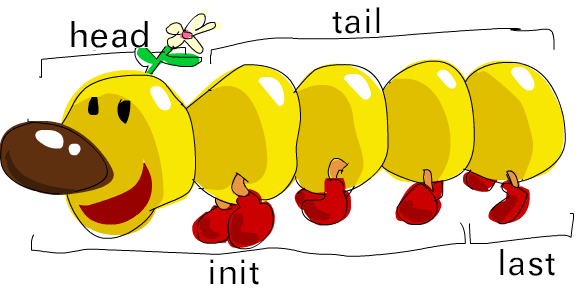
RACSequence has two very important properties: head and tail. head is an id, while tail is another RACSequence. This definition has a somewhat recursive nature.
    RACSequence *sequence = [RACSequence sequenceWithHeadBlock:^id{
        return @(1);
    } tailBlock:^RACSequence *{
        return @[@2,@3,@4].rac_sequence;
    }];

    NSLog(@"sequence.head = %@ , sequence.tail =  %@",sequence.head ,sequence.tail);
Output:
sequence.head = 1 , sequence.tail =  <RACArraySequence: 0x608000223920>{ name = , array = (
    2,
    3,
    4
) }
This test code reveals the definitions of head and tail. For a more detailed description, see the figure below:
The code above uses the RACSequence initialization method; a detailed analysis is provided later.
objectEnumerator is a fast enumerator.
@interface RACSequenceEnumerator : NSEnumerator
@property (nonatomic, strong) RACSequence *sequence;
@end
The reason this needs to be implemented is to make it easier to iterate over RACSequence.
- (id)nextObject {
    id object = nil;

    @synchronized (self) {
        object = self.sequence.head;
        self.sequence = self.sequence.tail;
    }

    return object;
}
With this NSEnumerator, you can traverse a RACSequence from head all the way to tail.
- (NSEnumerator *)objectEnumerator {
    RACSequenceEnumerator *enumerator = [[RACSequenceEnumerator alloc] init];
    enumerator.sequence = self;
    return enumerator;
}
Back to the definition of objectEnumerator in RACSequence: here it simply retrieves the internal RACSequenceEnumerator.
- (NSArray *)array {
    NSMutableArray *array = [NSMutableArray array];
    for (id obj in self) {
        [array addObject:obj];
    }
    return [array copy];
}
The definition of RACSequence also includes an array; this array returns an NSArray containing all the objects in the RACSequence. The reason for-in can be used here is that the NSFastEnumeration protocol is implemented. As for the efficiency of for-in, it depends entirely on the performance of the overridden countByEnumeratingWithState:objects:count: method in the NSFastEnumeration protocol.
Before analyzing the execution efficiency of for-in on RACSequence, let’s first review the definition of NSFastEnumerationState. The properties here will be used extensively in the implementation that follows.
typedef struct {
    unsigned long state; //Can be customized as any meaningful variable
    id __unsafe_unretained _Nullable * _Nullable itemsPtr;  //Returns the starting address of the object array
    unsigned long * _Nullable mutationsPtr;  //Points to a value that changes as the collection changes
    unsigned long extra[5]; //Can be customized as any meaningful array
} NSFastEnumerationState;
The function parameter to be analyzed next, stackbuf, is the object array provided for for-in, and len is the length of that array.
- (NSUInteger)countByEnumeratingWithState:(NSFastEnumerationState *)state objects:(__unsafe_unretained id *)stackbuf count:(NSUInteger)len {
    // Define the completed state as state = ULONG_MAX
    if (state->state == ULONG_MAX) {
        return 0;
    }

    // Since we need to traverse the sequence multiple times, use the state field here to record the sequence's base address
    RACSequence *(^getSequence)(void) = ^{
        return (__bridge RACSequence *)(void *)state->state;
    };

    void (^setSequence)(RACSequence *) = ^(RACSequence *sequence) {
        // Release the old sequence
        CFBridgingRelease((void *)state->state);
        // Retain the new sequence and store the sequence's base address in state
        state->state = (unsigned long)CFBridgingRetain(sequence);
    };

    void (^complete)(void) = ^{
        // Release the sequence and set state to completed
        setSequence(nil);
        state->state = ULONG_MAX;
    };

    // state == 0 is the initial value on the first call
    if (state->state == 0) {
        // During traversal, if the Sequence no longer changes, make mutationsPtr point to a constant value, the base address of the extra array
        state->mutationsPtr = state->extra;
        // Refresh the value of state again
        setSequence(self);
    }

    // Returned objects will be placed into stackbuf, so point itemsPtr to it
    state->itemsPtr = stackbuf;

    NSUInteger enumeratedCount = 0;
    while (enumeratedCount < len) {
        RACSequence *seq = getSequence();
        // Since the sequence may be lazily generated, prevent it from being released when the enumerator reaches it

        __autoreleasing id obj = seq.head;

        // End traversal if there is no head
        if (obj == nil) {
            complete();
            break;
        }
        // Traverse the sequence, placing each retrieved head into the stackbuf array.
        stackbuf[enumeratedCount++] = obj;

        // If there is no tail, traversal is complete
        if (seq.tail == nil) {
            complete();
            break;
        }

        // After taking the tail, the tail where this traversal ends becomes the head for the next traversal; set seq.tail as the Sequence head to prepare for the next loop
        setSequence(seq.tail);
    }

    return enumeratedCount;
}
The entire traversal process is similar to recursion, traversing from beginning to end in order.
Next, let’s take a closer look at the initialization of RACSequence:
+ (RACSequence *)sequenceWithHeadBlock:(id (^)(void))headBlock tailBlock:(RACSequence *(^)(void))tailBlock;

+ (RACSequence *)sequenceWithHeadBlock:(id (^)(void))headBlock tailBlock:(RACSequence *(^)(void))tailBlock {
   return [[RACDynamicSequence sequenceWithHeadBlock:headBlock tailBlock:tailBlock] setNameWithFormat:@"+sequenceWithHeadBlock:tailBlock:"];
}
Initializing RACSequence will invoke RACDynamicSequence. This is somewhat analogous to RACDynamicSignal for RACSignal.
Now let’s look at the definition of RACDynamicSequence.
@interface RACDynamicSequence () {
    id _head;
    RACSequence *_tail;
    id _dependency;
}
@property (nonatomic, strong) id headBlock;
@property (nonatomic, strong) id tailBlock;
@property (nonatomic, assign) BOOL hasDependency;
@property (nonatomic, strong) id (^dependencyBlock)(void);

@end
It should be noted here that the modifiers for headBlock, tailBlock, and dependencyBlock all use strong rather than copy. This is due to a very strange bug. https://github.com/ReactiveCocoa/ReactiveCocoa/issues/505 documents in detail the bug where using the copy keyword causes a memory leak. The specific code is as follows:
[[[@[@1,@2,@3,@4,@5] rac_sequence] filter:^BOOL(id value) {
    return [value intValue] > 1;
}] array];
The person who eventually discovered this issue changed copy to strong, and the bug was magically fixed. In the end, across the entire ReactiveCocoa library, this was the only place where the block’s attribute was changed from copy to strong; it was not changed to strong everywhere.
The original author, Justin Spahr-Summers, gave the final explanation for this issue as follows:
Maybe there’s just something weird with how we override dealloc, set the blocks from a class method, cast them, or something else.
So in our day-to-day code, when writing blocks, unless there is a special reason not to, we should still use copy as the property attribute.
+ (RACSequence *)sequenceWithHeadBlock:(id (^)(void))headBlock tailBlock:(RACSequence *(^)(void))tailBlock {
   NSCParameterAssert(headBlock != nil);

   RACDynamicSequence *seq = [[RACDynamicSequence alloc] init];
   seq.headBlock = [headBlock copy];
   seq.tailBlock = [tailBlock copy];
   seq.hasDependency = NO;
   return seq;
}
The hasDependency variable indicates whether there is a dependencyBlock. This function only saves headBlock and tailBlock.
+ (RACSequence *)sequenceWithLazyDependency:(id (^)(void))dependencyBlock headBlock:(id (^)(id dependency))headBlock tailBlock:(RACSequence *(^)(id dependency))tailBlock {
    NSCParameterAssert(dependencyBlock != nil);
    NSCParameterAssert(headBlock != nil);

    RACDynamicSequence *seq = [[RACDynamicSequence alloc] init];
    seq.headBlock = [headBlock copy];
    seq.tailBlock = [tailBlock copy];
    seq.dependencyBlock = [dependencyBlock copy];
    seq.hasDependency = YES;
    return seq;
}
Another class method, sequenceWithLazyDependency: headBlock: tailBlock:, takes a dependencyBlock. This method stores three blocks: headBlock, tailBlock, and dependencyBlock.
These two unique initialization methods of RACSequence lead to one of RACSequence’s two core issues: eager computation and lazy evaluation.
1. Eager Computation and Lazy Evaluation
In the definition of RACSequence, there are two other RACSequences: eagerSequence and lazySequence. These two RACSequences correspond to the eagerly computed RACSequence and the lazily evaluated RACSequence, respectively.
The most vivid analogy for these two concepts is still the joke from Mr. Zang’s blog post Talking About Lazy Computation in iOS Development. Quoted below:
A little white rabbit ran into a vegetable shop and asked the owner, “Boss, do you have 100 carrots?” The owner said, “Not that many.” The little white rabbit said disappointedly, “Sigh, you don’t even have 100 carrots…” The next day, the little white rabbit came to the vegetable shop again and asked the owner, “Do you have 100 carrots today?” The owner said awkwardly, “We’re still a bit short today; they should arrive tomorrow.” The little white rabbit left disappointed again. On the third day, as soon as the little white rabbit pushed open the door, the owner happily said, “They’re here, they’re here! The 100 carrots I ordered the day before yesterday have arrived.” The little white rabbit said, “Great, I’d like to buy 2!”…
If we encountered this kind of problem in everyday development, it would waste a lot of memory. For example, suppose we allocate an array with a size of one million in memory, but in practice we only use 100 values. This is where lazy computation is needed.
RACSequence supports both approaches. Let’s look at how the underlying source code implements them.
First, let’s look at the case we are usually very familiar with: eager computation.

In RACSequence, the representative of eager computation is RACEagerSequence, a subclass of RACArraySequence, which is itself a subclass of RACSequence. Its eager computation is reflected in its bind function.
- (instancetype)bind:(RACStreamBindBlock (^)(void))block {
    NSCParameterAssert(block != nil);
    RACStreamBindBlock bindBlock = block();
    NSArray *currentArray = self.array;
    NSMutableArray *resultArray = [NSMutableArray arrayWithCapacity:currentArray.count];

    for (id value in currentArray) {
        BOOL stop = NO;
        RACSequence *boundValue = (id)bindBlock(value, &stop);
        if (boundValue == nil) break;

        for (id x in boundValue) {
            [resultArray addObject:x];
        }

        if (stop) break;
    }

    return [[self.class sequenceWithArray:resultArray offset:0] setNameWithFormat:@"[%@] -bind:", self.name];
}
From the code above, you can see that it mainly performs two nested loops. The outer loop iterates over the values in its own RACSequence, then passes each value into the closure bindBlock( ), which returns an RACSequence. Finally, an NSMutableArray is used to collect the values from each RACSequence in order.
The second for-in loop iterates over an RACSequence. The reason it can be traversed using for-in is that it implements the NSFastEnumeration protocol, specifically the countByEnumeratingWithState: objects: count: method. This method was analyzed in detail above, so it will not be repeated here.
This is an example of eager evaluation: in each iteration, the value of the closure block( ) is computed. It is worth noting that the type of the final returned RACSequence is self.class, meaning it is still of type RACEagerSequence.
Now let’s take a look at how lazy evaluation is implemented in RACSequence.
In RACSequence, the bind function looks like this:
- (instancetype)bind:(RACStreamBindBlock (^)(void))block {
    RACStreamBindBlock bindBlock = block();
    return [[self bind:bindBlock passingThroughValuesFromSequence:nil] setNameWithFormat:@"[%@] -bind:", self.name];
}
It actually calls the bind: passingThroughValuesFromSequence: method, passing nil as the second argument.
- (instancetype)bind:(RACStreamBindBlock)bindBlock passingThroughValuesFromSequence:(RACSequence *)passthroughSequence {

    __block RACSequence *valuesSeq = self;
    __block RACSequence *current = passthroughSequence;
    __block BOOL stop = NO;

    RACSequence *sequence = [RACDynamicSequence sequenceWithLazyDependency:^ id {
        // Temporarily omitted
    } headBlock:^(id _) {
        return current.head;
    } tailBlock:^ id (id _) {
        if (stop) return nil;
        return [valuesSeq bind:bindBlock passingThroughValuesFromSequence:current.tail];
    }];

    sequence.name = self.name;
    return sequence;
}
In the implementation of the bind: passingThroughValuesFromSequence: method, a RACSequence is created and returned by using the sequenceWithLazyDependency: headBlock: tailBlock: method. We analyzed the source code of sequenceWithLazyDependency: headBlock: tailBlock: above; its main purpose is to store three closures: headBlock, tailBlock, and dependencyBlock.
Calling the bind operation inside RACSequence does not execute the values in those three closures; it merely stores them. This is exactly how lazy evaluation is manifested here—the computation happens only when the value is needed.
Based on the source-code analysis above, we can write the following test code to deepen our understanding.
    NSArray *array = @[@1,@2,@3,@4,@5];

    RACSequence *lazySequence = [array.rac_sequence map:^id(id value) {
        NSLog(@"lazySequence");
        return @(101);
    }];

    RACSequence *eagerSequence = [array.rac_sequence.eagerSequence map:^id(id value) {
        NSLog(@"eagerSequence");
        return @(100);
    }];
After the above code runs, it will output the following information:
eagerSequence
eagerSequence
eagerSequence
eagerSequence
eagerSequence
Only eagerSequence was output 5 times; lazySequence was not output. The reason is that the bind closure is actually invoked and executed only in eagerSequence, while in lazySequence the bind closure is merely copied.
So how can we make lazySequence execute the bind closure?
[lazySequence array];
By executing the code above, it will print “lazySequence” 5 times. This is because the bind closure will be invoked and executed again.
Eager evaluation and lazy evaluation are distinguished here. In RACSequence, except for RACEagerSequence, which performs only eager evaluation, all other Sequence types use lazy evaluation.
Next, let’s continue analyzing how RACSequence implements lazy evaluation.
RACSequence *sequence = [RACDynamicSequence sequenceWithLazyDependency:^ id {
    while (current.head == nil) {
        if (stop) return nil;

        // Iterate over the current sequence and get the next value
        id value = valuesSeq.head;

        if (value == nil) {
            // Finished iterating over all values in the sequence
            stop = YES;
            return nil;
        }

        current = (id)bindBlock(value, &stop);
        if (current == nil) {
            stop = YES;
            return nil;
        }

        valuesSeq = valuesSeq.tail;
    }

    NSCAssert([current isKindOfClass:RACSequence.class], @"-bind: block returned an object that is not a sequence: %@", current);
    return nil;
} headBlock:^(id _) {
    return current.head;
} tailBlock:^ id (id _) {
    if (stop) return nil;

    return [valuesSeq bind:bindBlock passingThroughValuesFromSequence:current.tail];
}];
In the bind operation, such a lazySequence is created. The three block closures capture the approach for creating a lazySequence.
headBlock takes an id as its input parameter and also returns an id. When creating the head of the lazySequence, it does not care about the input parameter and simply returns the head of passthroughSequence.
tailBlock takes an id as its input parameter and returns an RACSequence. Because the definition of RACSequence is somewhat recursive, tailBlock will recursively call bind:passingThroughValuesFromSequence: again to produce an RACSequence as the tail of the new sequence.
The return value of dependencyBlock is used as the input parameter for headBlock and tailBlock. However, in this case, neither headBlock nor tailBlock cares about that input parameter. Therefore, dependencyBlock becomes the closure that must be executed before the headBlock and tailBlock closures are executed.
The purpose of dependencyBlock is to transform all values in the original sequence once. current is the input passthroughSequence, and valuesSeq is a reference to the original sequence. Each loop iteration takes the head of the original sequence until no head can be obtained, which means traversal is complete.
After taking valuesSeq’s head, it is passed into the bindBlock( ) closure for transformation, and the return value is a current sequence. Before each headBlock and tailBlock execution, this dependencyBlock is called. The head of the transformed new sequence is current’s head, and the tail of the new sequence is produced by recursively calling with current.tail.
The process by which RACDynamicSequence creates lazyDependency is essentially the process of saving these three blocks. So when will these closures be called?
- (id)head {
    @synchronized (self) {
        id untypedHeadBlock = self.headBlock;
        if (untypedHeadBlock == nil) return _head;

        if (self.hasDependency) {
            if (self.dependencyBlock != nil) {
                _dependency = self.dependencyBlock();
                self.dependencyBlock = nil;
            }

            id (^headBlock)(id) = untypedHeadBlock;
            _head = headBlock(_dependency);
        } else {
            id (^headBlock)(void) = untypedHeadBlock;
            _head = headBlock();
        }

        self.headBlock = nil;
        return _head;
    }
}
The source code above is the implementation for obtaining the head of an RACDynamicSequence. When the head of the sequence needs to be retrieved, headBlock() is invoked. If a dependencyBlock closure has been stored, dependencyBlock() is executed first, before headBlock(), to perform a transformation.
- (RACSequence *)tail {
    @synchronized (self) {
        id untypedTailBlock = self.tailBlock;
        if (untypedTailBlock == nil) return _tail;

        if (self.hasDependency) {
            if (self.dependencyBlock != nil) {
                _dependency = self.dependencyBlock();
                self.dependencyBlock = nil;
            }

            RACSequence * (^tailBlock)(id) = untypedTailBlock;
            _tail = tailBlock(_dependency);
        } else {
            RACSequence * (^tailBlock)(void) = untypedTailBlock;
            _tail = tailBlock();
        }

        if (_tail.name == nil) _tail.name = self.name;

        self.tailBlock = nil;
        return _tail;
    }
}
When retrieving the tail from RACDynamicSequence, it behaves the same as retrieving the head: tailBlock( ) is invoked only when the tail actually needs to be extracted. If there is a dependencyBlock closure, the dependencyBlock closure is executed first, and then tailBlock( ) is called.
To summarize:
- RACSequence uses lazy evaluation. Except for the bind function of RACEagerSequence, all other Sequences are based on lazy evaluation. The corresponding closure is executed only right before the value is taken out for computation.
- Among all RACSequence functions, only the bind function passes in the dependencyBlock( ) closure (RACEagerSequence overrides this bind function). Therefore, whenever you see a dependencyBlock( ) closure, you can infer that RACSequence has performed a transformation operation.
2. Pull-driver and Push-driver
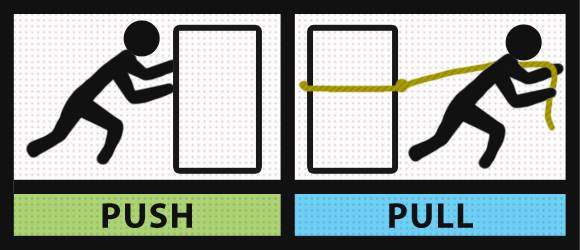
RACSequence has a method that can associate RACSequence with RACSignal.
- (RACSignal *)signal {
    return [[self signalWithScheduler:[RACScheduler scheduler]] setNameWithFormat:@"[%@] -signal", self.name];
}

- (RACSignal *)signalWithScheduler:(RACScheduler *)scheduler {
    return [[RACSignal createSignal:^(id<RACSubscriber> subscriber) {
        __block RACSequence *sequence = self;

        return [scheduler scheduleRecursiveBlock:^(void (^reschedule)(void)) {
            if (sequence.head == nil) {
                [subscriber sendCompleted];
                return;
            }
            [subscriber sendNext:sequence.head];
            sequence = sequence.tail;
            reschedule();
        }];
    }] setNameWithFormat:@"[%@] -signalWithScheduler: %@", self.name, scheduler];
}
The signal method in RACSequence calls the signalWithScheduler: method. In signalWithScheduler:, a new signal is created. The RACDisposable for this new signal is produced by scheduleRecursiveBlock:.
- (void)scheduleRecursiveBlock:(RACSchedulerRecursiveBlock)recursiveBlock addingToDisposable:(RACCompoundDisposable *)disposable {
    @autoreleasepool {
        RACCompoundDisposable *selfDisposable = [RACCompoundDisposable compoundDisposable];
        [disposable addDisposable:selfDisposable];

        __weak RACDisposable *weakSelfDisposable = selfDisposable;

        RACDisposable *schedulingDisposable = [self schedule:^{

            if (disposable.disposed) return;

            void (^reallyReschedule)(void) = ^{
                if (disposable.disposed) return;
                // This is recursion
                [self scheduleRecursiveBlock:recursiveBlock addingToDisposable:disposable];
            };

            // The __block keyword isn't actually needed here, but due to Clang compiler behavior, it is added to protect the variables below
            __block NSLock *lock = [[NSLock alloc] init];
            lock.name = [NSString stringWithFormat:@"%@ %s", self, sel_getName(_cmd)];

            __block NSUInteger rescheduleCount = 0;

            // Once the synchronous operation completes, rescheduleImmediately should be set to YES
            __block BOOL rescheduleImmediately = NO;

            @autoreleasepool {
                recursiveBlock(^{
                    [lock lock];
                    BOOL immediate = rescheduleImmediately;
                    if (!immediate) ++rescheduleCount;
                    [lock unlock];

                    if (immediate) reallyReschedule();
                });
            }

            [lock lock];
            NSUInteger synchronousCount = rescheduleCount;
            rescheduleImmediately = YES;
            [lock unlock];

            for (NSUInteger i = 0; i < synchronousCount; i++) {
                reallyReschedule();
            }
        }];

        [selfDisposable addDisposable:schedulingDisposable];
    }
}
Although this code is long, let’s break it down and analyze it:
__block NSUInteger rescheduleCount = 0;

// Once the sync operation completes, rescheduleImmediately should be set to YES
__block BOOL rescheduleImmediately = NO;
rescheduleCount is a counter for the number of recursive calls. The rescheduleImmediately BOOL determines whether to execute the reallyReschedule() closure immediately.
recursiveBlock is an input parameter; it is actually the closure code shown below:
{
   if (sequence.head == nil) {
    [subscriber sendCompleted];
    return;
   }

   [subscriber sendNext:sequence.head];

   sequence = sequence.tail;
   reschedule();
  }
The argument to recursiveBlock is reschedule(). After the code above finishes executing, it starts executing the code of the argument reschedule(). The code for the reschedule() closure is as follows:
    ^{
            [lock lock];
            BOOL immediate = rescheduleImmediately;
            if (!immediate) ++rescheduleCount;
            [lock unlock];

            if (immediate) reallyReschedule();
    }
This block increments rescheduleCount, and if rescheduleImmediately is YES, it continues by recursively invoking reallyReschedule().
   for (NSUInteger i = 0; i < synchronousCount; i++) {
    reallyReschedule();
   }
Eventually, the reallyReschedule() closure will be called recursively inside this loop. What the reallyReschedule() closure does is execute scheduleRecursiveBlock:recursiveBlock addingToDisposable:disposable again.
Each recursive execution takes the head value from the sequence and sends it, until sequence.head == nil, at which point the completion signal is sent.
Since RACSequence can also be converted into an RACSignal, we should summarize the similarities and differences between the two.
Summary:
Comparison of similarities and differences between RACSequence and RACSignal:
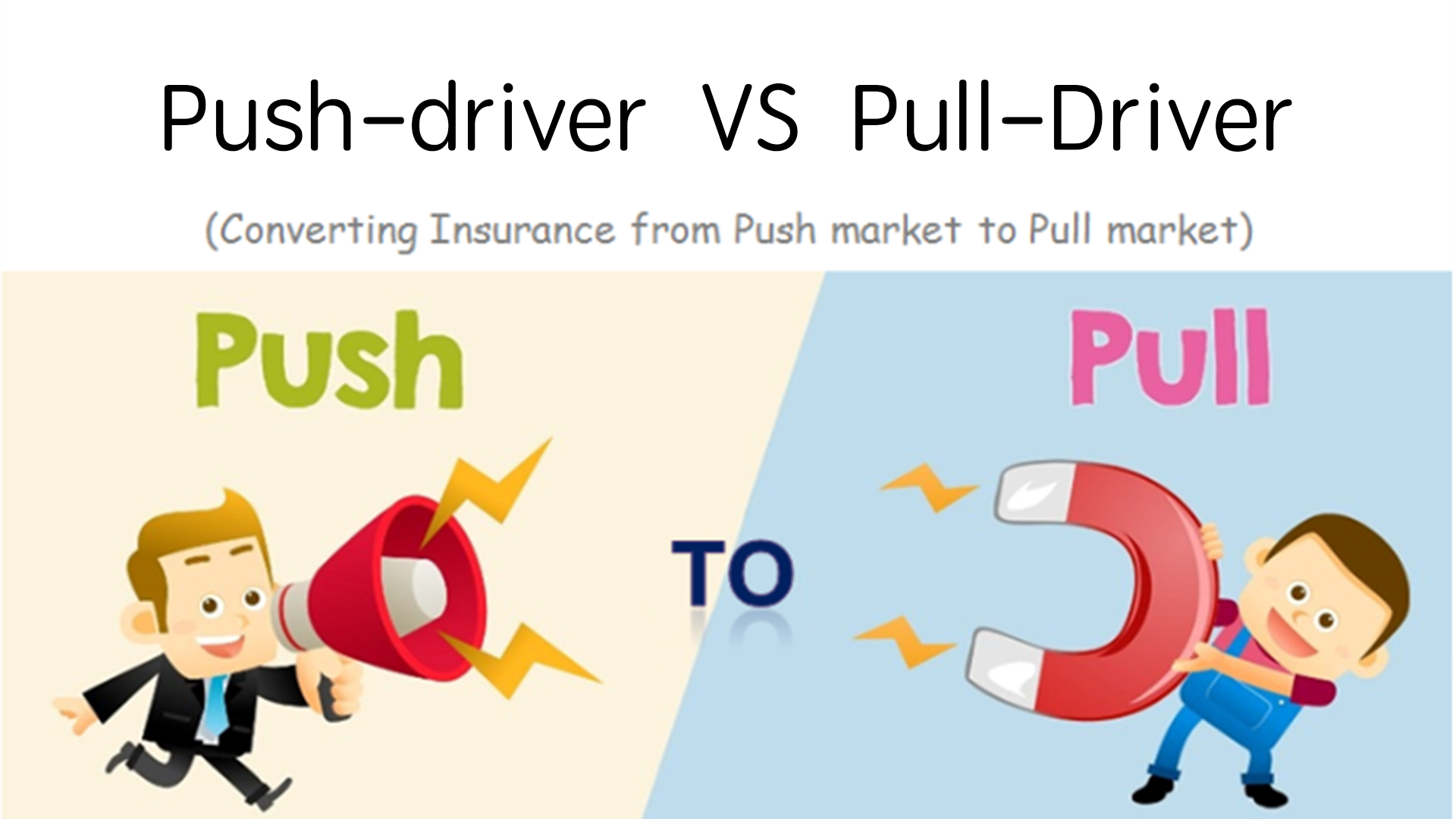
- Except for
RACEagerSequence, allRACSequenceimplementations are based on lazy evaluation, which is the same asRACSignal. RACSequenceis continuous in time. Once anRACSequenceis converted into a signal and subscribed to, it immediately sends out all values in one shot.RACSignalis discrete in time: it only sends a stream of data when an event arrives.RACSequenceis pull-driven: the subscriber determines whether values are sent. As long as the subscriber subscribes, the data stream will be sent.RACSignalis push-driven: whether it sends a data stream is not determined by the subscriber. Regardless of whether there are subscribers, once a discrete event occurs, it sends the data stream.RACSequencesends only data, whileRACSignalsends events. Events include not only data, but also event state, such as whether the event failed or completed.
III. Analysis of RACSequence Operation Implementations

RACSequence also supports the following operations.
- (id)foldLeftWithStart:(id)start reduce:(id (^)(id accumulator, id value))reduce;
- (id)foldRightWithStart:(id)start reduce:(id (^)(id first, RACSequence *rest))reduce;
- (BOOL)any:(BOOL (^)(id value))block;
- (BOOL)all:(BOOL (^)(id value))block;
- (id)objectPassingTest:(BOOL (^)(id value))block;
1. foldLeftWithStart: reduce:
- (id)foldLeftWithStart:(id)start reduce:(id (^)(id, id))reduce {
    NSCParameterAssert(reduce != NULL);

    if (self.head == nil) return start;

    for (id value in self) {
        start = reduce(start, value);
    }

    return start;
}
This function takes an initial value, start, then repeatedly executes reduce( ) in sequence. After the loop, the final value is returned as the result. This is a fold function, folding from left to right.
2. foldRightWithStart: reduce:
- (id)foldRightWithStart:(id)start reduce:(id (^)(id, RACSequence *))reduce {
    NSCParameterAssert(reduce != NULL);

    if (self.head == nil) return start;

    RACSequence *rest = [RACSequence sequenceWithHeadBlock:^{
        return [self.tail foldRightWithStart:start reduce:reduce];
    } tailBlock:nil];

    return reduce(self.head, rest);
}
This function is the same as the previous foldLeftWithStart: reduce:, except that it proceeds from right to left.
3. objectPassingTest:
- (id)objectPassingTest:(BOOL (^)(id))block {
    NSCParameterAssert(block != NULL);

    return [self filter:block].head;
}
objectPassingTest: calls the filter: function in RACStream, which was analyzed in the previous articles. If block(value) is YES, it means the test passed, so value’s sequence is returned. Extract head and return it.
4. any:
- (BOOL)any:(BOOL (^)(id))block {
    NSCParameterAssert(block != NULL);

    return [self objectPassingTest:block] != nil;
}
any: calls the objectPassingTest: function. If it is not nil, it means a value has passed the test. If any value passes, it returns YES; otherwise, it returns NO.
5. all:
- (BOOL)all:(BOOL (^)(id))block {
    NSCParameterAssert(block != NULL);

    NSNumber *result = [self foldLeftWithStart:@YES reduce:^(NSNumber *accumulator, id value) {
        return @(accumulator.boolValue && block(value));
    }];

    return result.boolValue;
}
all: Performs a block( ) Test on each value from left to right in order, then applies the && operation to each value in sequence.
6. concat:
- (instancetype)concat:(RACStream *)stream {
    NSCParameterAssert(stream != nil);

    return [[[RACArraySequence sequenceWithArray:@[ self, stream ] offset:0]
             flatten]
            setNameWithFormat:@"[%@] -concat: %@", self.name, stream];
}
concat: works the same way as it does in RACSignal. It connects the original sequence with the input stream, combines them into a higher-order sequence, and finally calls flatten to “flatten” it. For the implementation of flatten, see the analysis of the flatten implementation in RACStream from the previous articles.
7. zipWith:
- (instancetype)zipWith:(RACSequence *)sequence {
    NSCParameterAssert(sequence != nil);

    return [[RACSequence
             sequenceWithHeadBlock:^ id {
                 if (self.head == nil || sequence.head == nil) return nil;
                 return RACTuplePack(self.head, sequence.head);
             } tailBlock:^ id {
                 if (self.tail == nil || [[RACSequence empty] isEqual:self.tail]) return nil;
                 if (sequence.tail == nil || [[RACSequence empty] isEqual:sequence.tail]) return nil;

                 return [self.tail zipWith:sequence.tail];
             }]
            setNameWithFormat:@"[%@] -zipWith: %@", self.name, sequence];
}
Because the definition of a sequence is recursive, zipWith: is also implemented recursively. The head of the new sequence produced by zipWith: is an RACTuplePack formed by combining the heads of the original two sequences. The tail of the new sequence is obtained by recursively calling zipWith: on the tails of the original two sequences.
IV. Some Extensions of RACSequence
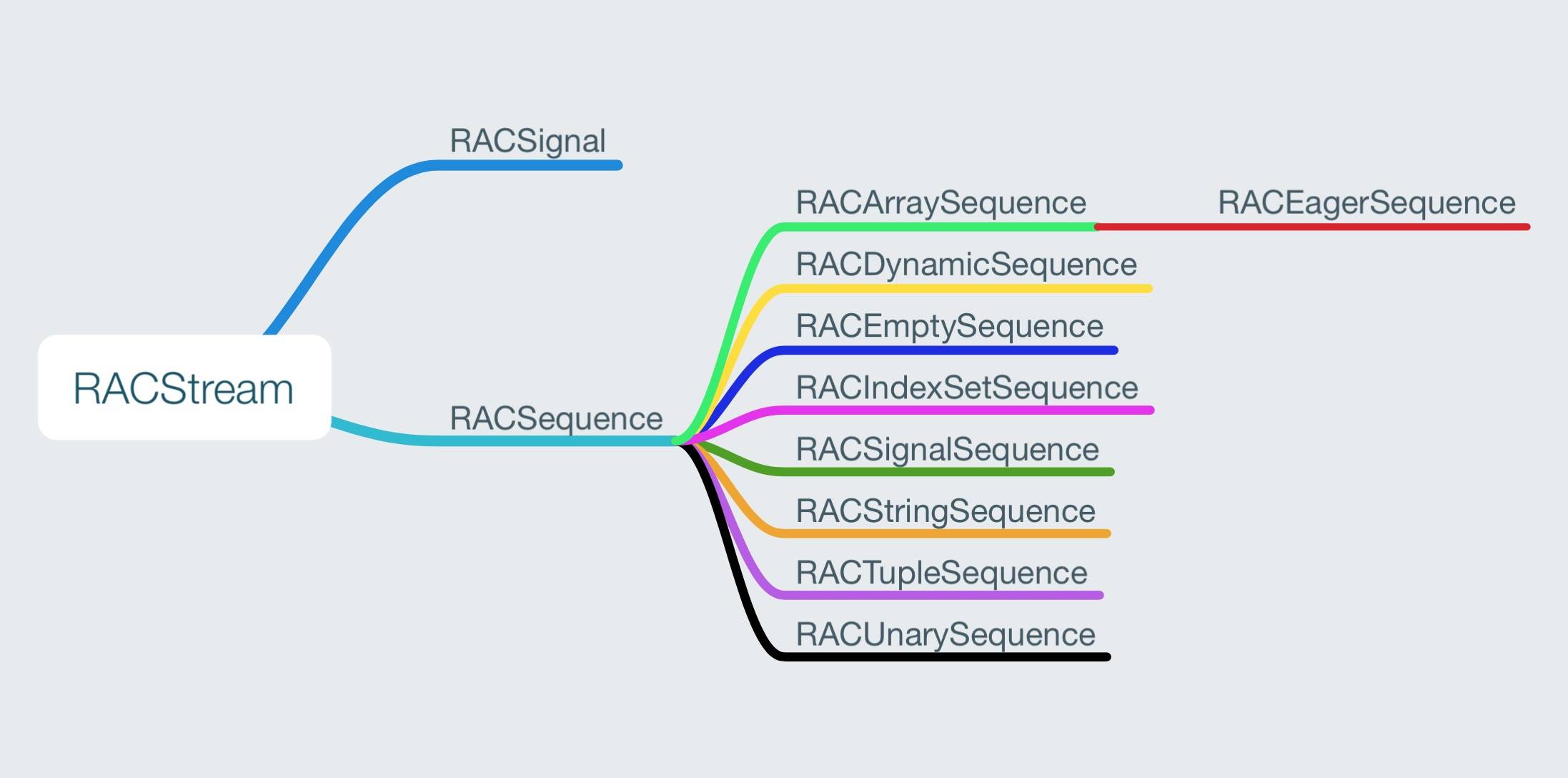
There are 9 subclasses of RACSequence, among which RACEagerSequence inherits from RACArraySequence. From the names of these subclasses, you can tell what type of data the sequence contains. RACUnarySequence contains a unary sequence. It has only a head value and no tail value.

RACSequenceAdditions has a total of 7 categories. These 7 categories extend the collection classes in iOS with RACSequence, making it more convenient for us to use RACSequence.
1. NSArray+RACSequenceAdditions
@interface NSArray (RACSequenceAdditions)
@property (nonatomic, copy, readonly) RACSequence *rac_sequence;
@end
This category can convert any NSArray into an RACSequence.
- (RACSequence *)rac_sequence {
 return [RACArraySequence sequenceWithArray:self offset:0];
}
Creates and returns a RACArraySequence from an NSArray.
2. NSDictionary+RACSequenceAdditions
@interface NSDictionary (RACSequenceAdditions)
@property (nonatomic, copy, readonly) RACSequence *rac_sequence;
@property (nonatomic, copy, readonly) RACSequence *rac_keySequence;
@property (nonatomic, copy, readonly) RACSequence *rac_valueSequence;
@end
This category can convert any NSDictionary into a RACSequence.
- (RACSequence *)rac_sequence {
   NSDictionary *immutableDict = [self copy];
     return [immutableDict.allKeys.rac_sequence map:^(id key) {
      id value = immutableDict[key];
      return RACTuplePack(key, value);
   }];
}

- (RACSequence *)rac_keySequence {
   return self.allKeys.rac_sequence;
}

- (RACSequence *)rac_valueSequence {
   return self.allValues.rac_sequence;
}
rac_sequence converts dictionaries into a RACSequence filled with RACTuplePack instances. In this RACSequence, the first position is the key, and the second position is the value.
rac_keySequence is a RACSequence filled with all keys.
rac_valueSequence is a RACSequence filled with all values.
3. NSEnumerator+RACSequenceAdditions
@interface NSEnumerator (RACSequenceAdditions)
@property (nonatomic, copy, readonly) RACSequence *rac_sequence;
@end
This category can convert any NSEnumerator into an RACSequence.
- (RACSequence *)rac_sequence {
    return [RACSequence sequenceWithHeadBlock:^{
        return [self nextObject];
    } tailBlock:^{
        return self.rac_sequence;
    }];
}
The head of the returned RACSequence is the head of the current sequence, and its tail is the current sequence itself.
4. NSIndexSet+RACSequenceAdditions
@interface NSIndexSet (RACSequenceAdditions)
@property (nonatomic, copy, readonly) RACSequence *rac_sequence;
@end
This category can convert any NSIndexSet into an RACSequence.
- (RACSequence *)rac_sequence {
    return [RACIndexSetSequence sequenceWithIndexSet:self];
}

+ (instancetype)sequenceWithIndexSet:(NSIndexSet *)indexSet {
    NSUInteger count = indexSet.count;
    if (count == 0) return self.empty;
    NSUInteger sizeInBytes = sizeof(NSUInteger) * count;
    NSMutableData *data = [[NSMutableData alloc] initWithCapacity:sizeInBytes];
    [indexSet getIndexes:data.mutableBytes maxCount:count inIndexRange:NULL];

    RACIndexSetSequence *seq = [[self alloc] init];
    seq->_data = data;
    seq->_indexes = data.bytes;
    seq->_count = count;
    return seq;
}
Returns an RACIndexSetSequence. In this IndexSetSequence, data contains NSData, indexes contains NSUInteger, and count contains the total number of indexes.
5. NSOrderedSet+RACSequenceAdditions
@interface NSOrderedSet (RACSequenceAdditions)
@property (nonatomic, copy, readonly) RACSequence *rac_sequence;
@end
This category can convert any NSOrderedSet into an RACSequence.
- (RACSequence *)rac_sequence {
    return self.array.rac_sequence;
}
Convert the array in the returned NSOrderedSet into a sequence.
6. NSSet+RACSequenceAdditions
@interface NSSet (RACSequenceAdditions)
@property (nonatomic, copy, readonly) RACSequence *rac_sequence;
@end
This Category can convert any NSSet into an RACSequence.
- (RACSequence *)rac_sequence {
   return self.allObjects.rac_sequence;
}
Creates and returns a RACArraySequence from the NSSet's allObjects array.
7. NSString+RACSequenceAdditions
@interface NSString (RACSequenceAdditions)
@property (nonatomic, copy, readonly) RACSequence *rac_sequence;
@end
This category can convert any NSString into an RACSequence.
- (RACSequence *)rac_sequence {
    return [RACStringSequence sequenceWithString:self offset:0];
}
It returns the sequence corresponding to an array filled with string characters.
Finally
This completes the analysis of the underlying implementations of RACSequence and RACTuple. Feedback and corrections are welcome.